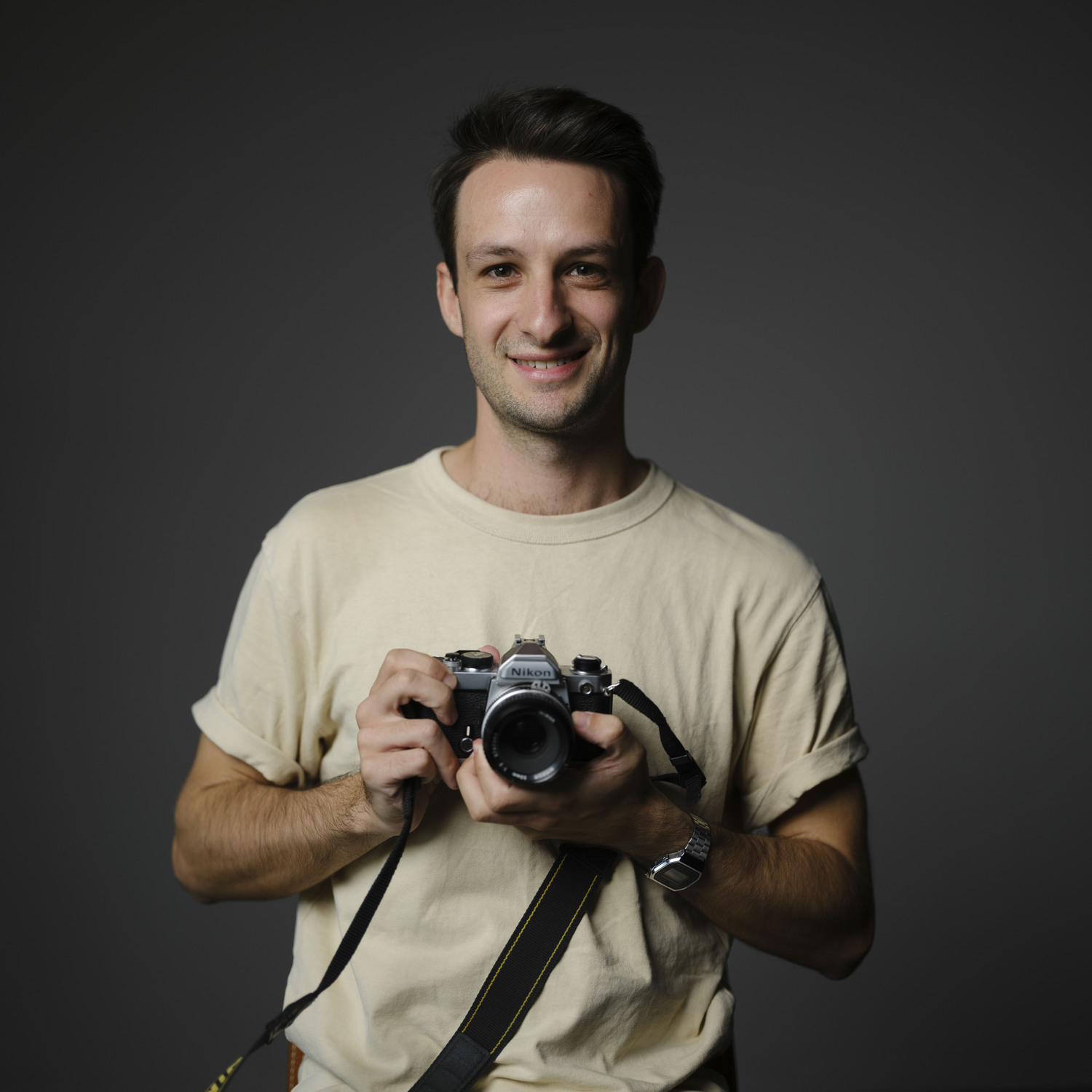
ABOUT ME

me

My approach

to photography đź“–

Imagine this: you are at a photography exhibition. You come across a photograph that captivates you—a scene of children playing in the street, bathed in the warm glow of the setting sun. Intrigued, you strike up a conversation with the photographer, who happens to be standing beside their work.

As the conversation unfolds, you learn that this image is part of a series of 30 photographs, all capturing the same moment but with subtle variations in angle and composition. The photographer shares that they meticulously selected this particular shot as the most evocative, discarding the others and choosing to showcase only this one.

Knowing that this image is not truly "unique," do you feel differently about it now?

Later, the photographer reveals that he edited out a cat crossing the street, finding it distracting. He also enhanced the orange and pink tones of the clouds to add more vibrancy and applied a vignette to guide the viewer’s focus toward the center of the frame.

Now that you know the image was manipulated to amplify its impact, does your perception change?


While there’s nothing inherently wrong with such an approach, for me, learning that the image is neither wholly unique nor a faithful reflection of reality diminishes its wonder, admiration, and appeal.

This is why I approach photography differently. I take only one shot per scene. If my subject blinks, or if the bird flies away, the moment is lost and my shot is ruined—but if I nail it, then it becomes truly special.

Similarly, I do not alter my photographs. I’ll adjust lighting when necessary—akin to setting a scanner’s parameters to accurately digitize negatives—but I don’t crop, rotate, or retouch my images. If the horizon is perfectly level, it’s because I properly composed the shot, not because I corrected it in post-processing.

This commitment makes my photography more challenging, but I believe it proportionally enhances its authenticity and beauty.

Moreover, I feel this approach fosters trust between me and my audience. When someone looks at my work, they know they’re seeing exactly what I saw through my viewfinder when I pressed the shutter.